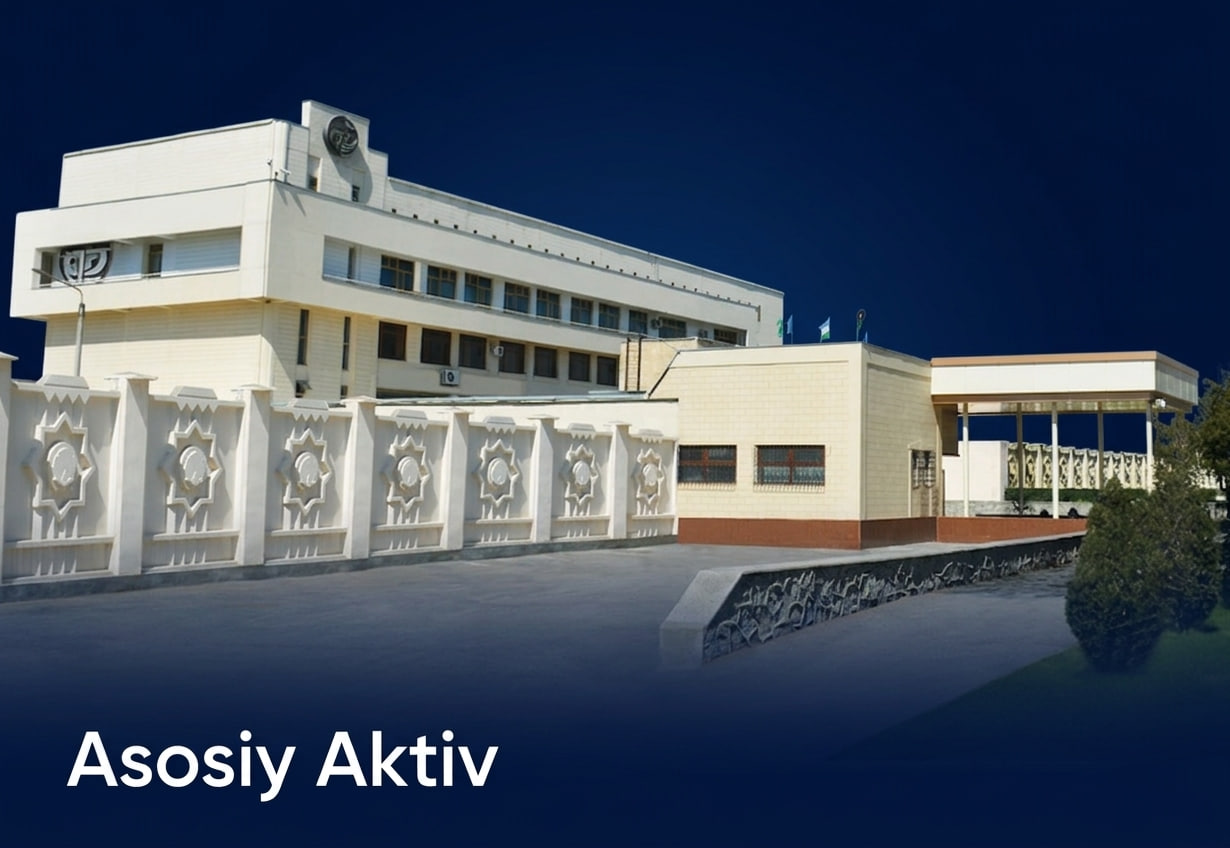
The most valuable securities, biometric passports, and national currency in all of Central Asia are produced behind one set of highly guarded closed doors. This is not merely a manufacturing plant, but an absolute financial monopolist absorbing colossal state contracts with guaranteed margins and zero market competition.
There are unique corporate entities in the economy whose market share and revenue generation are directly tied to state sovereignty. The State Sign limited liability company under the Central Bank is exactly this kind of hyper-profitable asset. Established in nineteen ninety-two as a standard state production association, the structure was transformed into a modern corporate entity by two thousand and nineteen. Its operations provide the lifeblood for the entire financial system of the country. From printing physical cash to issuing biometric citizen passports, all critically important documents are generated exclusively here. Operating in a market with absolutely no competition, the company has established an unquestionable monopoly, standing as the only full-cycle production facility in Central Asia.
The operational capacity of this massive industrial and financial conglomerate is divided into three major divisions. The first is the Printing Factory, launched in nineteen ninety-three, where the first batches of the national currency were born. Driven by a strategic surge in capital expenditure, a completely new facility for passports and high-security products was commissioned in two thousand and five. This was not just an infrastructure expansion, but a calculated move to secure the largest and most consistent financial orders from the state. The production of securities, excise stamps, and strict accountability forms means that every major commercial transaction in the country indirectly relies on this factory's output.
One of the most high-margin operations takes place at the Paper Factory. Launched in nineteen ninety-five using advanced German technology, this enterprise converts cheap domestic cotton fiber into a highly valuable financial asset. Special pulp made from one hundred percent cotton is integrated directly into the production process.
The high-margin secure paper portfolio includes:
Banknote paper ranging from seventy-five to one hundred grams per square meter, surface-sized with polyvinyl alcohol.
Special security paper between seventy and one hundred twenty grams per square meter.
Passport paper ranging from ninety to one hundred forty grams per square meter, highly resistant to chemical alkalis and organic solvents.
This technological supply chain allows the state to save massive amounts of foreign exchange reserves that would otherwise be spent importing expensive secure paper, instead creating immense value-add from internal resources.
The company's third major asset is the Mint, recognized as one of the youngest yet most technologically advanced hubs globally. Opened in nineteen ninety-seven, this complex is fully equipped with premium German machinery. The Mint executes massive budget orders for the government and various agencies by striking commemorative and circulation coins, state awards, orders, and medals. This transcends basic metalworking; it is the monetization of raw materials into jewelry-grade sovereign assets, driving exceptional profitability. Specialized brass stamps and watermarking tools are also manufactured in-house, creating a fully independent ecosystem that prevents capital flight.
One of the largest drivers of perpetual cash flow for the company is the biometric passport production line. Currently, the forty-eight-page passports designed for international travel are printed on these captive presses. The text and intricate ornamental designs on every page are executed using cutting-edge offset and intaglio printing technologies. The deep, embossed patterns printed via intaglio serve as the strongest and most expensive barrier against counterfeiting. Considering that millions of citizens pay mandatory state fees to obtain these travel documents, the massive financial turnover backing this specific production line is staggering.
The financial defense of the sovereign balance sheet relies on the corporation's exclusive institutional client base, which includes:
The Central Bank
The National Guard
The Ministry of Defense
The National Bank
The State Security Service
Uzbekistan Railways
The extreme durability of the banknotes drastically cuts the state budget's transaction costs during periods of macroeconomic volatility and currency replacement cycles. With its full-cycle production network, guaranteed government contracts, and high-tech infrastructure, this closed financial machine remains one of the most lucrative and strategically vital assets in the country. Behind every single physical note and every passport lies the relentlessly turning gears of this giant monopoly.