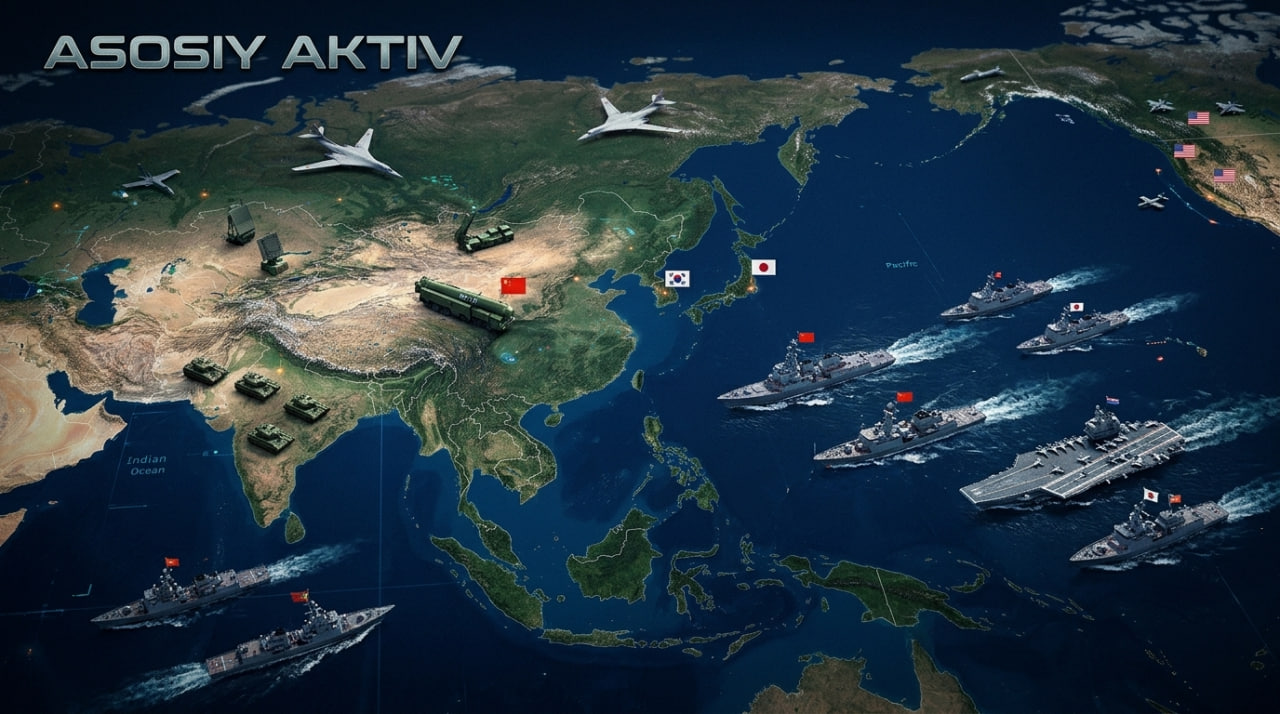
President Donald Trump’s unilateral decision to scale back joint military exercises with South Korea, coupled with the announcement of an upcoming summit with North Korean leader Kim Jong Un, has exposed the transactional nature of the administration's foreign policy. Asian diplomats view this pivot not merely as a diplomatic overture to Pyongyang, but as a coercive pressure tactic indirectly linked to the broader conflict with Iran, signaling a dangerous willingness to sacrifice allied interests for short-term political leverage.
The Anxiety of Contingent Commitments
While an Asian diplomat acknowledged that the supremacy of U.S. defense technology currently makes a total pivot economically irrational, a fundamental strategic shift is underway. "Expect a refocus on self-reliance," the diplomat noted, emphasizing a long-term strategy to reduce dependence on the U.S. security umbrella. Ian Brzezinski, a former deputy assistant secretary of Defense, highlighted the contagion effect: "Everyone’s wondering whether or not their relationship with the United States is as unstable as the Koreans’."
The rapidity of Washington's policy reversals is striking. As recently as December, Secretary of Defense Pete Hegseth lauded South Korea as a "model ally." Yet, this relationship is now being reassessed. This pattern of unpredictability mirrors the administration's May decision to freeze a $14 billion arms sale to Taiwan, explicitly utilizing the transaction as a "bargaining chip" in negotiations with Chinese leader Xi Jinping.
Seoul's Frustration and Regional Realignments
The South Korean leadership perceives the administration's actions as a direct affront. Foreign Minister Cho Hyun informed lawmakers that Seoul was entirely blindsided, stating the government was "not notified in advance" regarding the truncated exercises. Consequently, President Lee Jae Myung—who previously sought to court Trump with a gold crown—is now actively courting alternative alliances. Former U.S. official Jung Pak observes that Lee is proactively engaging with African nations, the Gulf states, and Japan to establish independent defense architectures.
The redeployment of the sole Asia-based U.S. aircraft carrier to the Middle East further fuels skepticism regarding Washington's capacity to simultaneously manage multi-theater crises. In response, regional powers are forging their own defense pacts. The June supply chain agreement for joint military training between Japan and the Philippines, and the May weapons co-production initiative between India and Vietnam, exemplify this urgent drive for strategic autonomy. As former Japanese Embassy official Yuki Tatsumi noted, Tokyo increasingly perceives itself as leading a coalition of anxious U.S. allies preparing for a future with diminished American presence.
This escalating friction presents a geopolitical windfall for Beijing. Chinese Foreign Minister Wang Yi's current visit to Seoul offers a prime opportunity to exploit the widening fissure between Washington and its allies. Nicholas Burns, former U.S. ambassador to China, noted that the Chinese leadership has persistently sought to dismantle U.S.-dominated alliances in the region, and Trump's criticism of the South Korean leadership provides Beijing with the perfect opening to advocate for a Seoul less dependent on American deterrence.