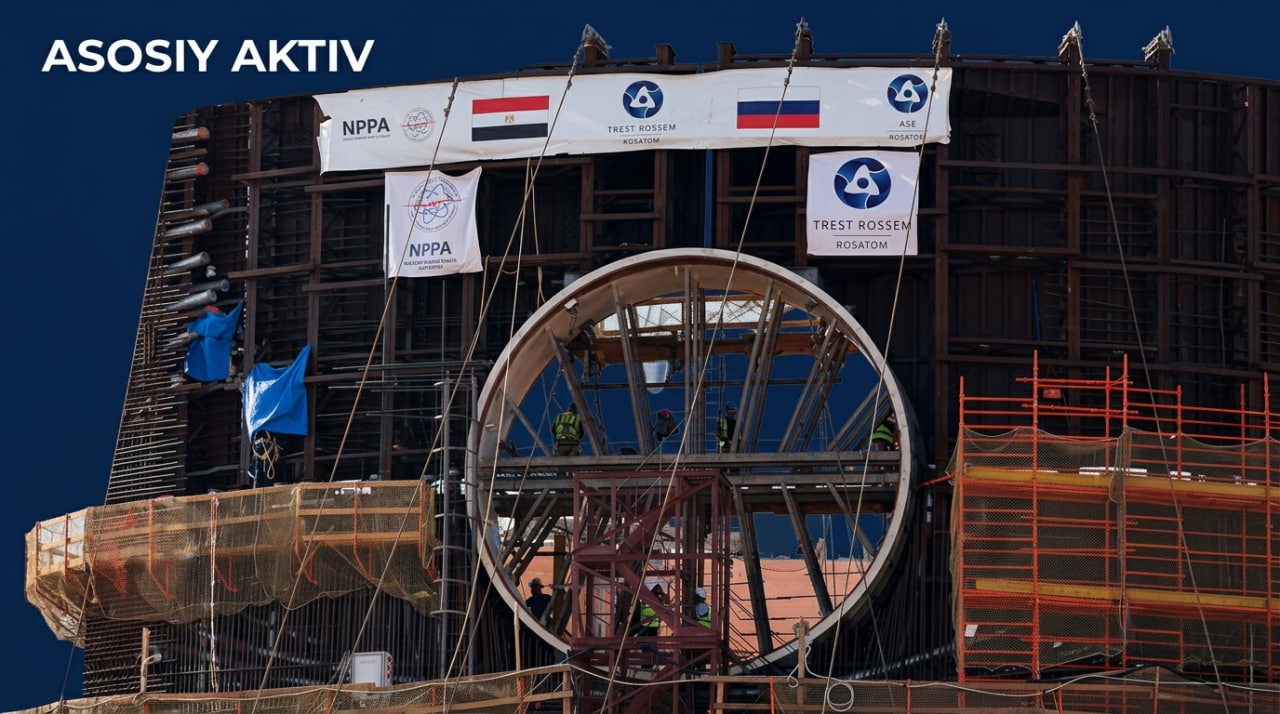
Russia's state-backed nuclear corporation, Rosatom, which has aggressively lobbied to maintain its standing as a formidable and reliable supplier of critical nuclear architecture across the European Union despite stifling international sanctions, is currently navigating a catastrophic operational and engineering crisis in the Middle East. Severe systemic disputes unfolding at the El Dabaa nuclear power plant, situated on Egypt's Mediterranean coast 300 kilometers northwest of Cairo, have thoroughly compromised the corporation’s technical credibility and shattered its corporate management reputation.
The fundamental danger embedded within this crisis extends far beyond North Africa: the catastrophic technical fissures exposed by Cairo pose an immediate, existential threat to Hungary’s flagship Paks II project. Both multi-billion-dollar sovereign megaprojects rely on the exact same VVER-1200 reactor technological platform.
"Fictitious Work" and Crumbling Infrastructure
The granular details of this engineering implosion were exposed via a highly confidential letter dispatched by Egypt's Nuclear Power Plants Authority to Rosatom's senior executive tier on June 4 of this year. The document relentlessly details how the technical execution of the project is fatally lagging behind mandated international parameters. The Egyptians explicitly cite massive "voids behind the metal cladding at Unit 4," coupled with critical "defects in the foundation slabs of Units 1, 2 and 3." The foundational flaws were so severe that they required an entire year of remedial engineering just to stabilize.
The indictment goes further, accusing Rosatom of executing "misleading methods" and submitting invoices for "fictitious work" in a brazen attempt to artificially inflate construction completion metrics. While the Russian contractor aggressively projected that the plant was over 50% complete, ruthless visual inspections by Egyptian officials confirmed that the primary nuclear island structures remain effectively paralyzed in the underground construction phase.
The Complete Collapse of Safety Culture
Compounding the catastrophic engineering failures is the total breakdown of operational command and control at the facility. Site inspectors documented unauthorized personnel breaching the highly secure zone via "forged passes," the rampant presence of "prohibited alcoholic beverages," and an astonishing collapse in emergency response protocols. In a stark effort to cover up a severe industrial accident, site management actively smuggled a worker suffering from "a severe open fracture" out of the facility using a private vehicle, bypassing an equipped ambulance. The Egyptian regulator classified this action as a gross and intentional violation of the "nuclear safety culture and reporting obligations," demonstrating a reckless disregard for human life and institutional compliance.
The Hungarian Deadlock and Systemic Default
The primary collateral victim of this Egyptian engineering chaos may reside within the European Union. Initially green-lit by former Prime Minister Viktor Orbán in 2014—with concrete finally poured in February 2026—the Paks II project is the vital keystone of Hungary’s long-term electricity decarbonization strategy. However, haunted by the structural fractures in Egypt, the government of newly elected Prime Minister Péter Magyar has been forced to initiate a comprehensive, emergency audit of the project’s immense price tag and functional reliability.
Rosatom's own leaked 2025 internal audit corroborates these external fears. The corporation's analysts conceded a "significant risk of failure to fulfill" sovereign contractual obligations, projecting that the commissioning schedule for El Dabaa’s first reactor will slip by an agonizing 18 months—from September 2028 to March 2030.
While a European Commission spokesperson reiterated that nuclear safety remains an absolute priority for the bloc, it is clear that should similar operational negligence or structural degradation manifest at the Hungarian site, Brussels regulators will ruthlessly paralyze the project. Although Rosatom aggressively denies the allegations—shielding itself behind claims of adherence to the highest safety standards and the ongoing oversight of the IAEA—this devastating leak will undoubtedly shatter institutional investor confidence, forcing a brutal reevaluation of the corporation's sprawling portfolio across Turkey, China, and the global market.