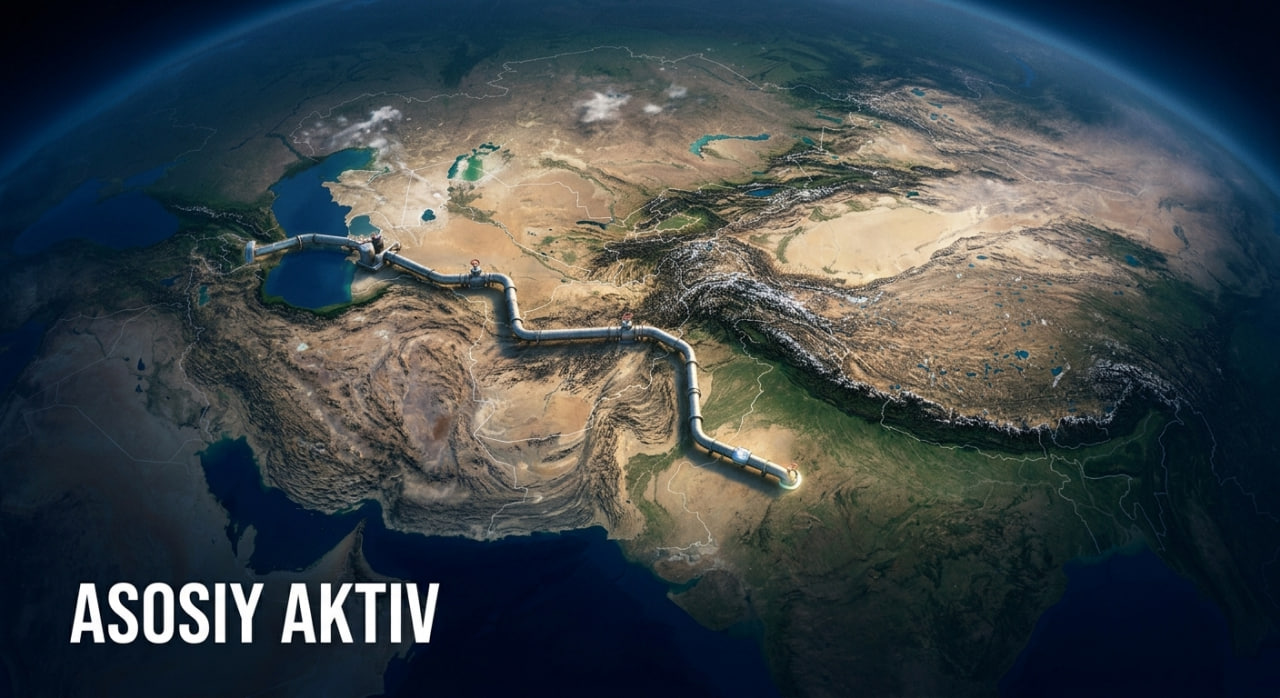
The Turkmenistan–Afghanistan–Pakistan–India gas pipeline, designed to reshape South and Central Asian energy geopolitics, reached a decisive operational milestone by late 2026. Spanning 1,814 kilometers from the massive Galkynysh gas field in Turkmenistan to Fazilka on the Indian border, the pipeline represents a 10 billion dollar modern infrastructure corridor reviving the historic Silk Road. The concept originated in the early 1990s as international energy majors sought independent export routes for Caspian gas that bypassed both Russian transmission infrastructure and Iranian territory. Initial efforts spearheaded by Argentina's Bridas Corporation and subsequent consortium attempts by America's Unocal alongside Saudi Delta under the CentGas banner stalled following regional conflict and the 1998 US embassy bombings. The initiative was formally revived through intergovernmental frameworks in 2010, leading to the commencement of construction in December 2015.
The economic viability of TAPI rests on Turkmenistan’s proven natural gas reserves of 19.5 trillion cubic meters, accounting for 9.8 percent of the global total according to BP Statistical Review. Ranking fourth globally behind Russia, Iran, and Qatar, Ashgabat views the pipeline as vital to diversifying its export destinations away from its heavy concentration on the Chinese market and legacy pipelines to Russia. The 56-inch pipeline, operating at a pressure of 100 atmospheres, is designed to transit 33 billion cubic meters of natural gas annually. Afghanistan is allocated 5 billion cubic meters, while Pakistan and India are scheduled to receive 14 billion cubic meters each.
The governance framework is anchored by the consortium TAPI Pipeline Company Limited, in which state-owned Turkmengaz holds an 85 percent controlling stake. The remaining equity is split equally at 5 percent each among Afghan Gas Corporation, Pakistan’s Inter State Gas Systems, and India’s GAIL. The Asian Development Bank has served as transaction advisor and secretariat, providing an initial 200 million dollar budget to advance detailed route surveys, engineering studies, and social impact frameworks. Construction milestones across the route have progressed rapidly. The 214-kilometer Turkmen section is fully built.
On the critical 153-kilometer Afghan segment connecting Serhetabat and Herat, which began in late 2024, 102 kilometers of pipeline have already been laid. Teams are installing pipeline at an average speed of 500 meters per day, putting the project on schedule to reach Herat by the end of 2026. General Director of TPCL Muhammetmyrat Amanov confirmed that commercial gas deliveries to Afghanistan are projected to begin between late 2026 and early 2027. Crucially, more than 90 percent of investment agreements required to guarantee financial security with Pakistan were concluded in the first half of 2026.
The strategic architecture of the pipeline is also drawing new regional players. Kazakhstan submitted a formal proposal in late 2025 seeking up to a 30 percent equity stake in the consortium. If approved by existing shareholders, Kazakh participation would reinforce TAPI’s capital base and unlock an alternative export route for Kazakh gas into high-demand South Asian economies. For Afghanistan, which depends on foreign imports for 80 percent of its domestic energy consumption, TAPI secures both critical supply and steady transit revenue. Three decades after its inception, TAPI is transitioning from a geopolitical ambition into the backbone of Eurasian energy integration.